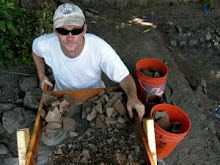
A series of excellent events coming up of interest to the industrial heritage and industrial patrimony.
------------------------------------------------------------------
Social Science Brown Bag Lecture Series: Louise Dyble
"Landmark of Death: Responsibility, Safety, and the Question of a Suicide Barrier on the Golden Gate Bridge."
Friday, March 26th, 12 Noon - 1 PM. Room AOB 201.
------------------------------------------------------------------
T. Allan Comp visit and lectures, March 28-29, 2010
Biography:
Dr T. Allan Comp is an historian based in Washington, DC. Jo Hanson, the pioneering public artist in San Francisco, once described Allan as "a relaxed blend of John Muir, John Dewey and John the Baptist." He holds a Ph.D in history, worked for several years in cultural resources with the National Park Service, left that to work as a developer of historic properties and consultant to historic preservation projects, and then to work for a regional Heritage Area in western Pennsylvania where he invented AMD&ART. Always a volunteer for AMD&ART, his work attracted the attention of other watershed and community improvement projects in the Appalachian coal country and in the Western hard rock mining country as well. Winner of multiple awards in partnerships and planning, Allan now leads the OSM/VISTA Team and Brownfields Initiatives at the Office of Surface Mining in the U.S. Department of the Interior.
http://tacomp.info/
Coffee with Social Science grad students from Industrial Heritage and Archaeology and Environmental Policy.
Monday, March 29, 8:30-9:30, Annex Seminar Room
The term "sustainable" can be, and is, thrown around a lot, but what does it really mean? How are we as practicing professionals working in the environment to appropriately use the term? What are the realistic dimensions of "sustainable'? What part does public input, public understanding, public support play in sustainability?
I'd like to review a few projects that attempted a broader approach to sustainability and then turn to some of the lessons learned in those efforts, both for professional practice and the
language we use to describe that practice and for larger community-based perceptions of sustainability (or reality) as well.
One such example is the AMD & Art project (
http://www.orionmagazine.org/index.php/articles/article/460/)
Comp’s idea was to reclaim toxic former coal mines using not only science but elements of design, sculpture, and history, which he hoped would spur community involvement and create vital public spaces…Undeterred, Comp put together a core team of designers that included hydrologist Bob Deason, sculptor Stacy Levy, and landscape designer Julie Bargmann. And crucial members of his elaborate cast were the townspeople themselves. “If I have an art form, it’s probably choreography,” Comp explained, “and I don’t even get to pick the dancers. I’ve got elephants and gazelles and they all have to work together.”… For years, Allan Comp has been describing the Vintondale project as “art that works.” The AMD&ART Park “works” in the sense that it filters acid mine drainage from millions of gallons of water. But it works in a much more subtle way as well—in the way the people of Vintondale experience and respond to it as art…ALLAN COMP HAS DESCRIBED the term “AMD&ART” as a shorthand for “science and the arts.” Following the ecological principle of interdependence, he possesses an almost mystical belief that disciplinary boundaries need to be broken down and worked across. Turf wars, especially at universities where budgets are strained, have too often kept the sciences and the humanities on opposite sides of campus, increasingly specialized, and so estranged that they, quite literally, cannot understand the language the other is speaking.”
“Twelve years after he hatched the idea to resurrect the town dump of Vintondale, Comp feels more certain than ever that the “arts and the humanities are absolutely necessary to environmental recovery.” Science can change the water chemistry, but for Comp, it is art and history, combined with the science, that will ultimately change people’s minds—will change the way we think about an industrial economy that is destroying the very ecosystems that sustain us, and all life. “It’s not the water that’s the problem, it’s us,” Comp said. “And if we fix us, we’ll start fixing the water.””
Evening Public Engagement: Community-driven design in Environmental Reclamation
Monday March 29, 2010 6:30pm MUB Alumni Lounge B
The public lecture will definitely focus primarily on AMD&ART. Dr. Comp will explore the co-dependence of the arts and sciences in environmental reclamation by introducing the community as the pivotal factor in adding sustainability to the process. The public lecture will also focus on a few other spin-off projects to establish the viability of the approach and then try to draw a few lessons learned. It will also include a short bit on a strong determined OSM/VISTA team of volunteers in Appalachia and the Western Hardrock. This will be followed by an open question and answer session in the form of a dialogue.
------------------------------------------------------------------
Social Science Brown Bag Lecture Series: Sean Gohman
"John M. Longyear's land holdings in the Gogebic Iron Range through the lens of Geographic Information Systems"
Friday, April 2nd, Noon-1 PM, room AOB 201.
------------------------------------------------------------------
Moulshri Joshi, visit and lectures, April 18-24.
During the week of April 18-24, the Social Sciences department and the Visiting Women and Minority Lecturer/Scholar Series will be hosting
Moulshri Joshi, a New Delhi architect and industrial heritage practitioner who is best known for her firm's prize-winning design of the Indian memorial to the victims of the Bhopal industrial disaster.
Prof. Joshi will be available to participate in undergraduate classes and graduate seminars in environmental policy and industrial heritage management, and will meet with other interested groups across campus, to discuss current practices related to environmentally-sensitive planning as well as international industrial heritage policy – both celebratory and critical. The central event of her residency will be a campus-wide lecture (probably Tues evening April 20) on the Bhopal Disaster and current efforts in India to memorialize its victims. Prof. Joshi, though early in her career, has been an invited consultant in Japan and Europe to discuss these matters.
The websites listed below can give you more information about Prof. Joshi's architectural firm, 'Space Matters,' as well as descriptions of the Bhopal memorial and the many public controversies arising from it. [This note by email from Susan Martin]
http://www.spacematters.in/
http://bhopalmemorial.blogspot.com/
http://www.telegraphindia.com/1091204/jsp/nation/story_11819749.jsp
http://www.thehindu.com/thehindu/fline/fl2626/stories/20100101262603800.htm